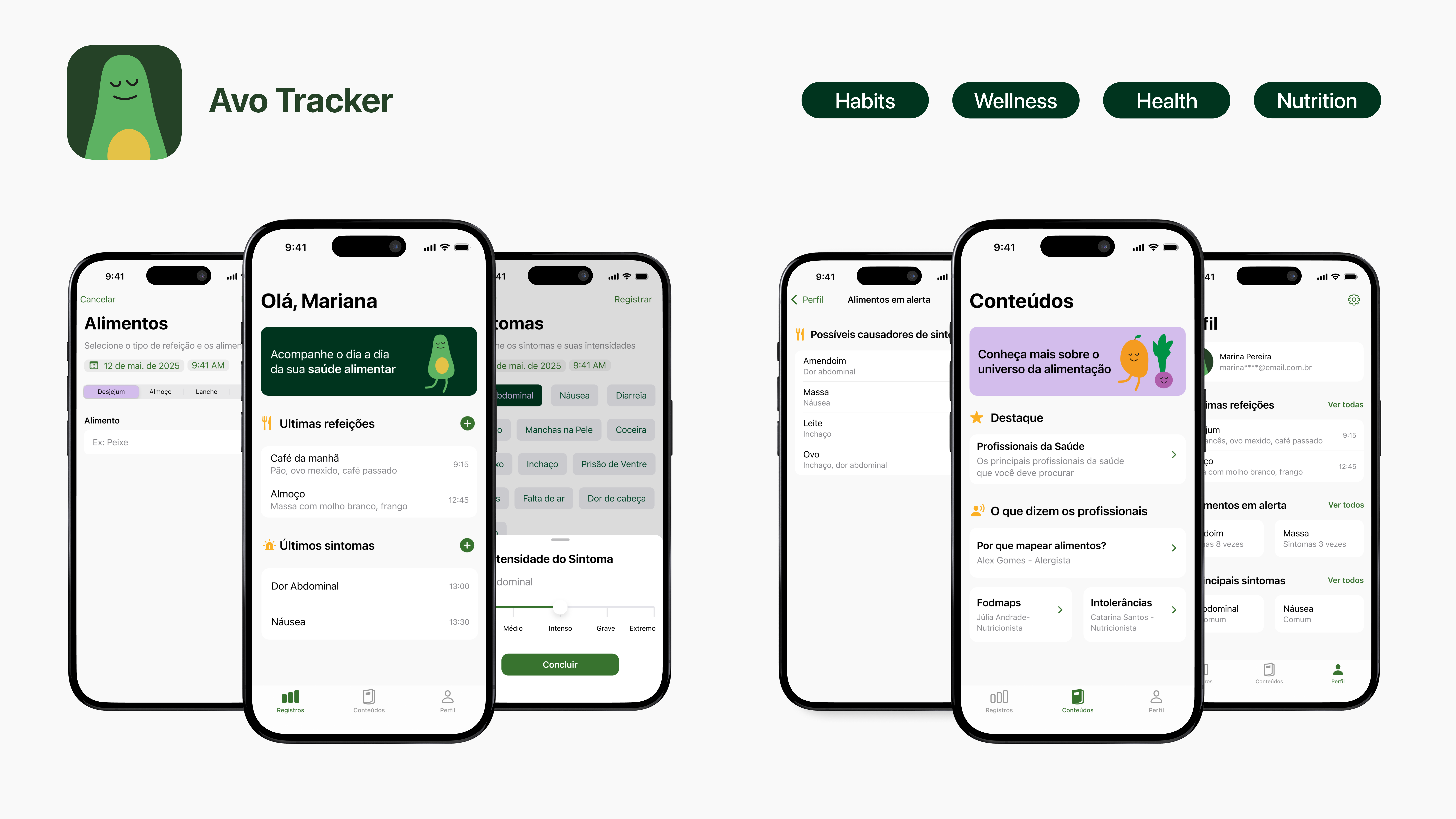
/ iOS App · Product Design · Health
Developed to help people identify potential food allergies and intolerances by logging meals and symptoms.
The app analyzes patterns between foods consumed and symptoms, organizes the history, and assists in tracking dietary health.
/ Challenge
Identifying food intolerances and dietary restrictions is often a slow and frustrating process. Many people rely on memory or fragmented notes to track meals and symptoms, making it difficult to recognize patterns and understand potential food triggers.
This lack of visibility impacts users' ability to manage their health and limits the quality of information shared with healthcare professionals during consultations. As a result, diagnosis and treatment decisions may be based on incomplete data.
The opportunity was to create a solution that helps users systematically track meals and symptoms while supporting more informed medical follow-up.
/ Solution
I designed Avo Tracker, a mobile application that helps users identify potential food triggers by connecting meal records with symptom tracking over time.
The solution was built around a simple principle: transform fragmented health information into actionable insights. By centralizing meal and symptom data in a structured timeline, users can better understand their dietary patterns while providing healthcare professionals with more reliable information to support diagnosis and treatment decisions.
This approach creates value through self-awareness and by improving the quality of medical follow-up.
/ Key Features
Brief description of the feature and its impact for the user.
Brief description of the feature and its impact for the user.
Brief description of the feature and its impact for the user.
Brief description of the feature and its impact for the user.
Brief description of the feature and its impact for the user.
Brief description of the feature and its impact for the user.
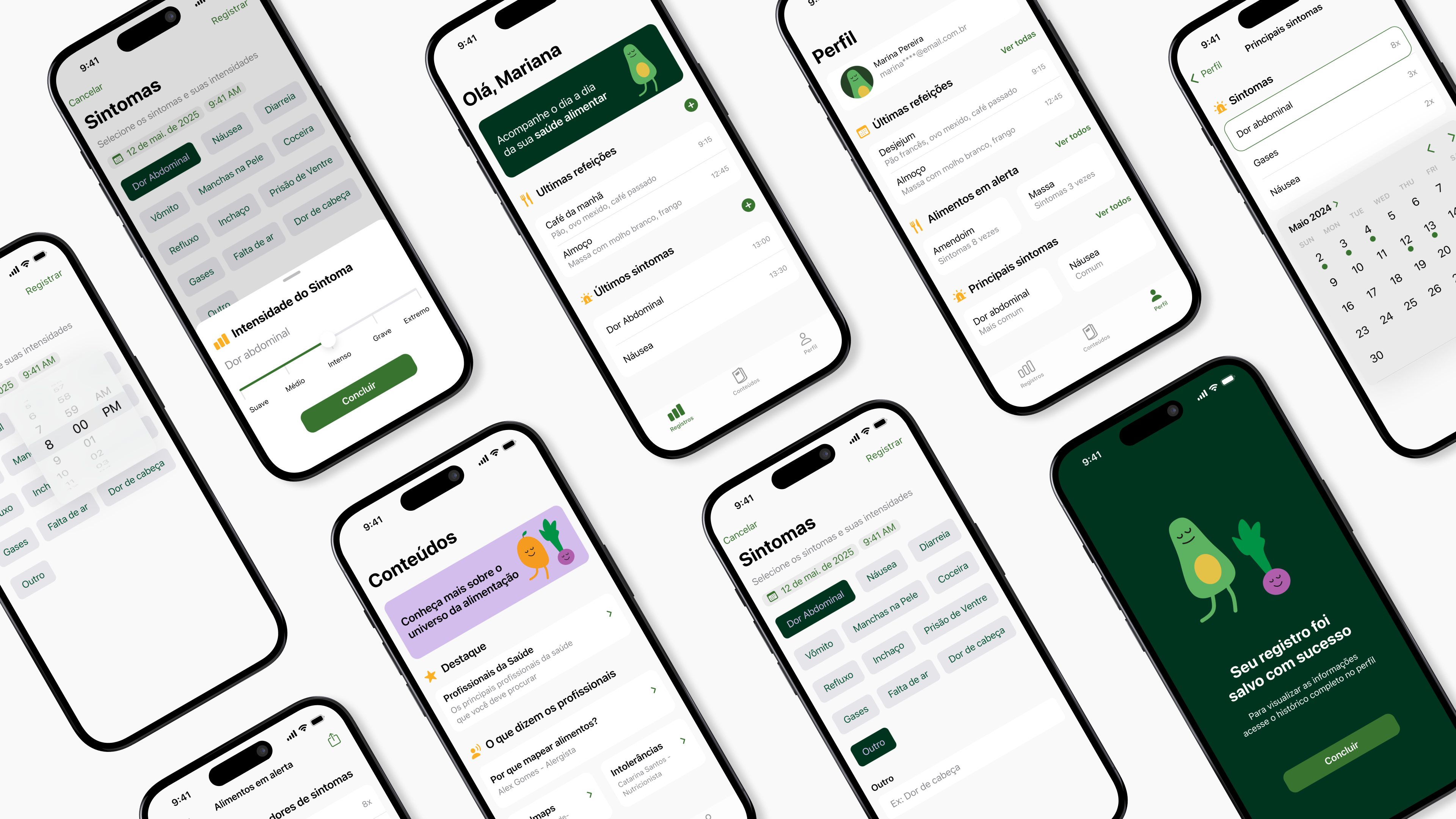
/ Product Process
User interviews, pain point mapping, and definition of the core Jobs to be Done. Competitor analysis and market benchmarking.
Data synthesis, personas, user journeys, and requirements definition. Ideation workshop with the team to generate solutions.
Low-fidelity wireframes, Design System construction, and high-fidelity prototyping in Figma.
Usability testing with real users, results analysis, and design iterations based on collected feedback.
Development in Swift/SwiftUI with weekly sprints (Scrum). Submission and approval on the App Store.
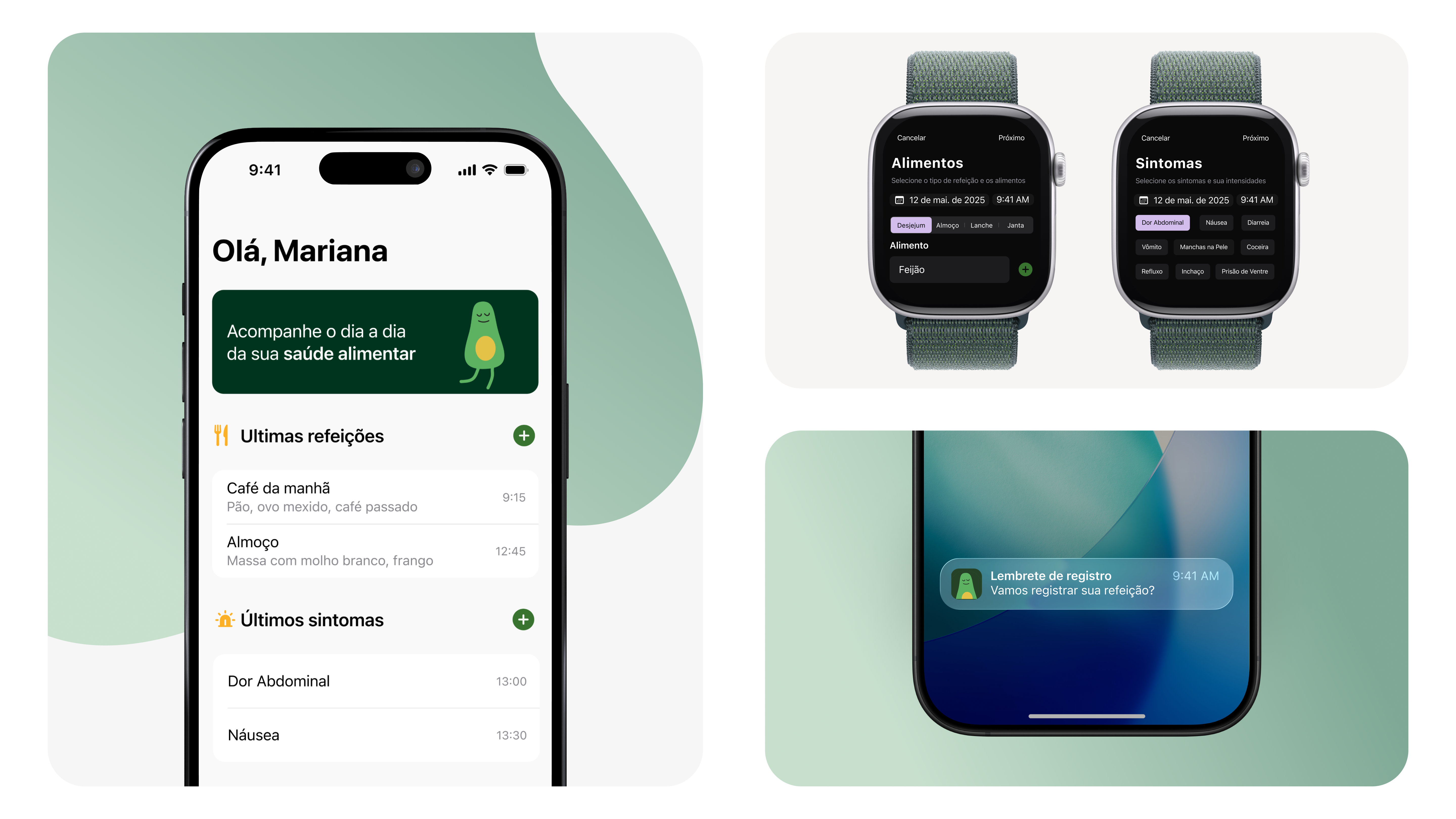
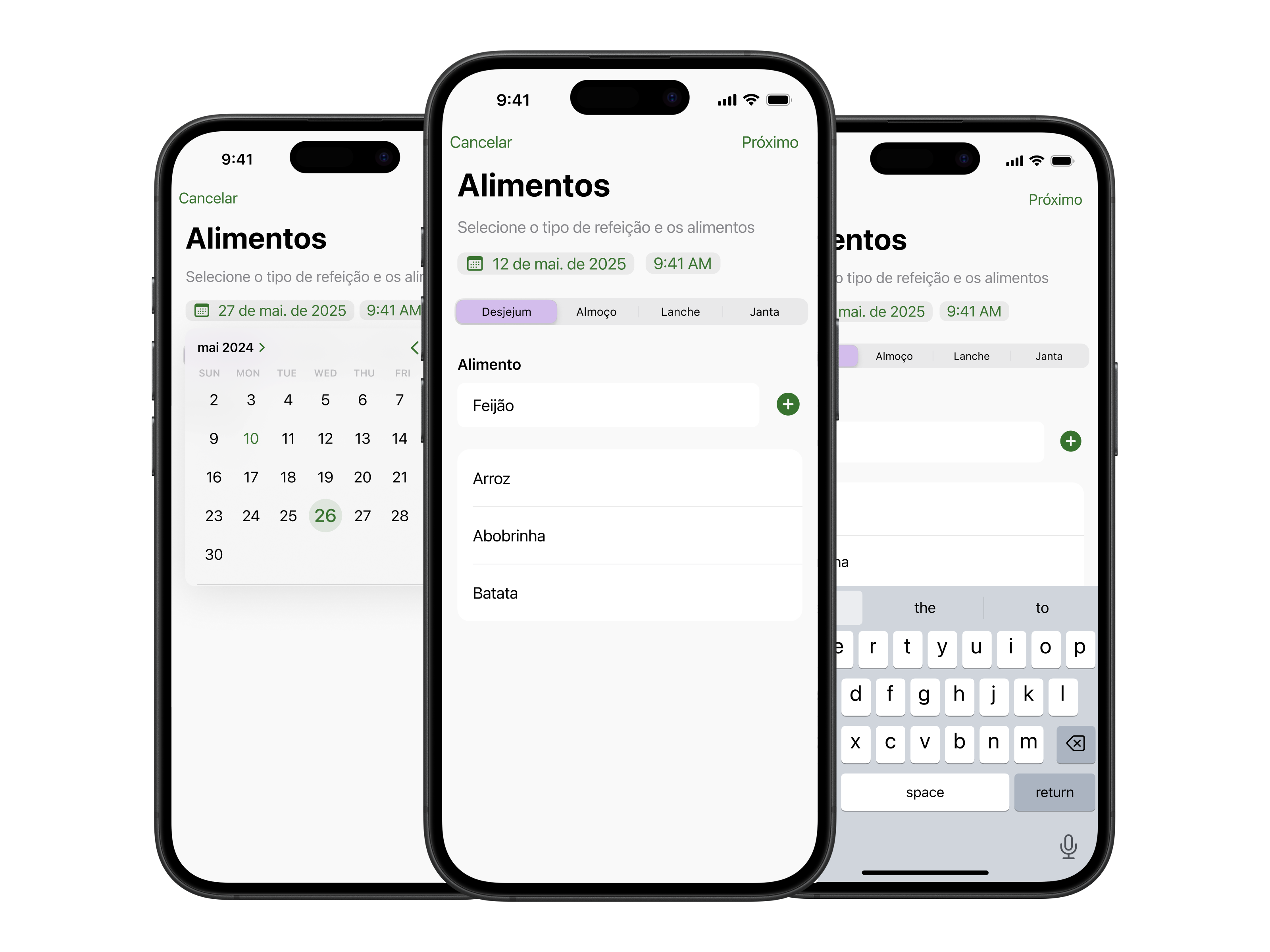
Log every meal in seconds by choosing the meal type and searching for foods. Building a structured, complete history for spotting patterns over time.
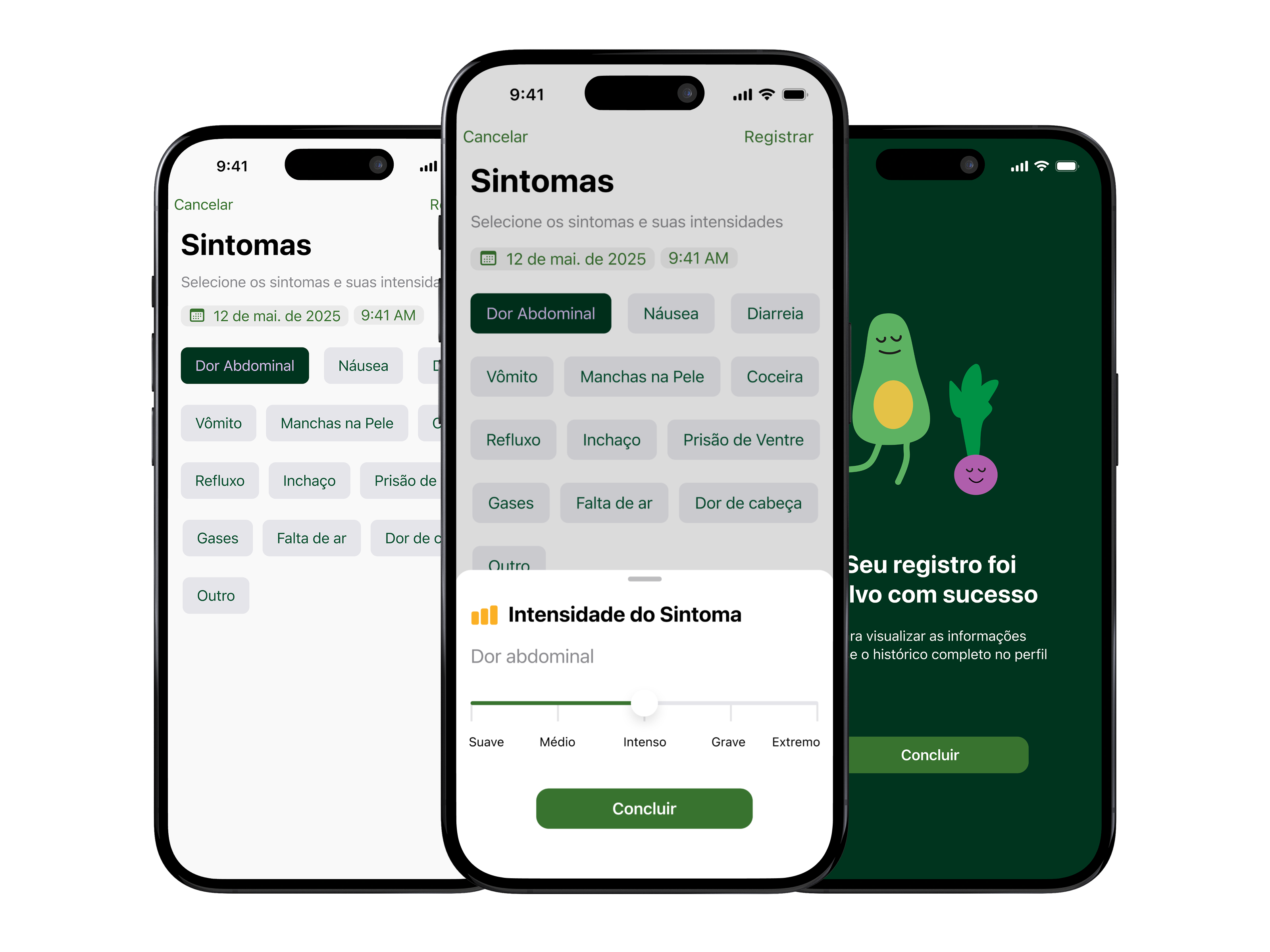
Quickly log symptoms and their intensity on a single screen. The history will show how often the user experienced discomfort.