
/ iOS App · Product Design · FinTech
Profitto is a business management app designed for small entrepreneurs. It centralizes product catalogs, inventory, purchases, and sales in one place, with automatic stock updates and low-stock alerts, making daily operations simpler, faster, and more organized.
/ Challenge
Small entrepreneurs — especially those in food and handcraft businesses — often manage their finances, inventory, and pricing using disconnected tools: spreadsheets, notebooks, or simply memory. This fragmentation makes it nearly impossible to understand the real cost of each product, track stock accurately, or set prices that actually guarantee a profit.
Without clear visibility into their numbers, many business owners end up underpricing products, running out of key ingredients without warning, or losing control of their financial health over time.
The opportunity was to create a single, accessible platform that brings financial control, inventory management, and smart pricing together — removing the friction and giving small entrepreneurs the clarity they need to run their business with confidence.
/ Solution
The app centralizes financial control, inventory management, and pricing in a single intuitive platform built for small entrepreneurs.
By registering products and their ingredients, the app automatically calculates the total production cost and links it directly to inventory and guided pricing. Each recorded sale updates the financial dashboard in real time and adjusts stock levels accordingly — with alerts when ingredients are running low to help avoid waste and shortages.
The result is a connected system that gives entrepreneurs a clear view of their real costs, suggests prices that ensure profit and competitiveness, and puts the full picture of their business in one place.
/ Key Features
Clear overview of daily sales, profit, and best-selling products — updated automatically with every registered sale.
Guided pricing tool that calculates the ideal selling price based on production cost, fixed costs, and desired profit margin.
Real-time stock tracking linked to sales. Automatic alerts when ingredients are running low to prevent shortages.
Automatic calculation of total production cost per item based on registered ingredients and variable inputs.
Simple sales log that connects each transaction to inventory and financial data for a complete business view.
Organized product library with ingredients, categories, and cost data all linked in one place.
/ Product Process
Interviews with small entrepreneurs to map pain points around pricing, inventory, and financial management. Benchmark of existing tools and analysis of user workarounds.
Synthesis of research into personas and user journeys. Definition of core product requirements: financial dashboard, guided pricing, and inventory alerts as the three pillars.
Wireframes and high-fidelity prototypes in Figma. Creation of a design system aligned with clarity and simplicity — ensuring the app feels approachable for non-technical users.
Usability testing with real small business owners. Iterations focused on simplifying the pricing flow and making the dashboard immediately readable at a glance.
Development in Swift/SwiftUI with weekly Scrum sprints. Integration of all three core systems — sales, inventory, and pricing — into a unified data layer.
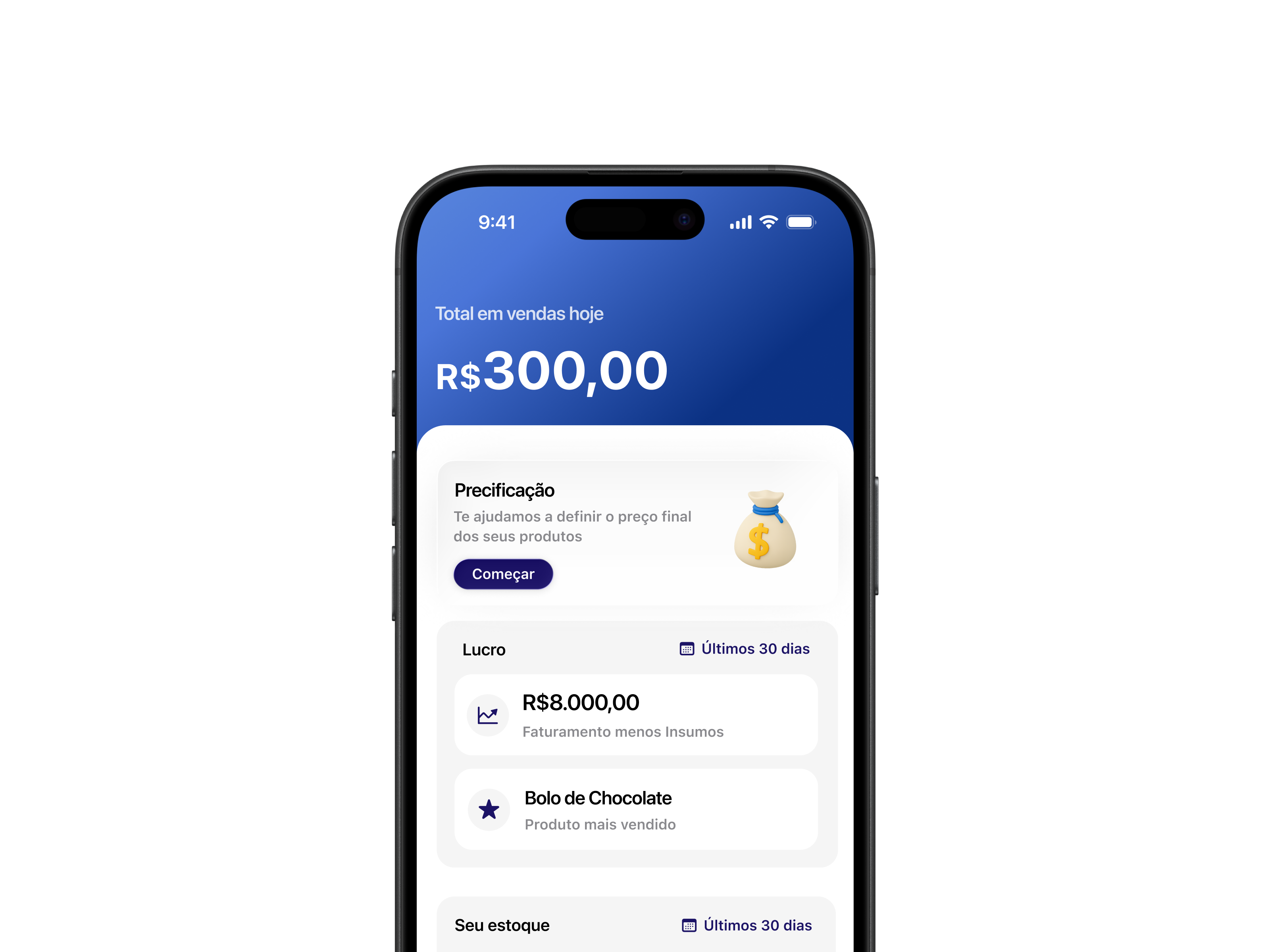
Profitto brings together everything a small entrepreneur needs to simplify their daily routine and gain more control and practicality. All the most important information about the business is centralized in one place, without complexity — the biggest differentiator is how easy it is to use, with the entire experience designed so anyone can organize their business without dealing with complicated tools.
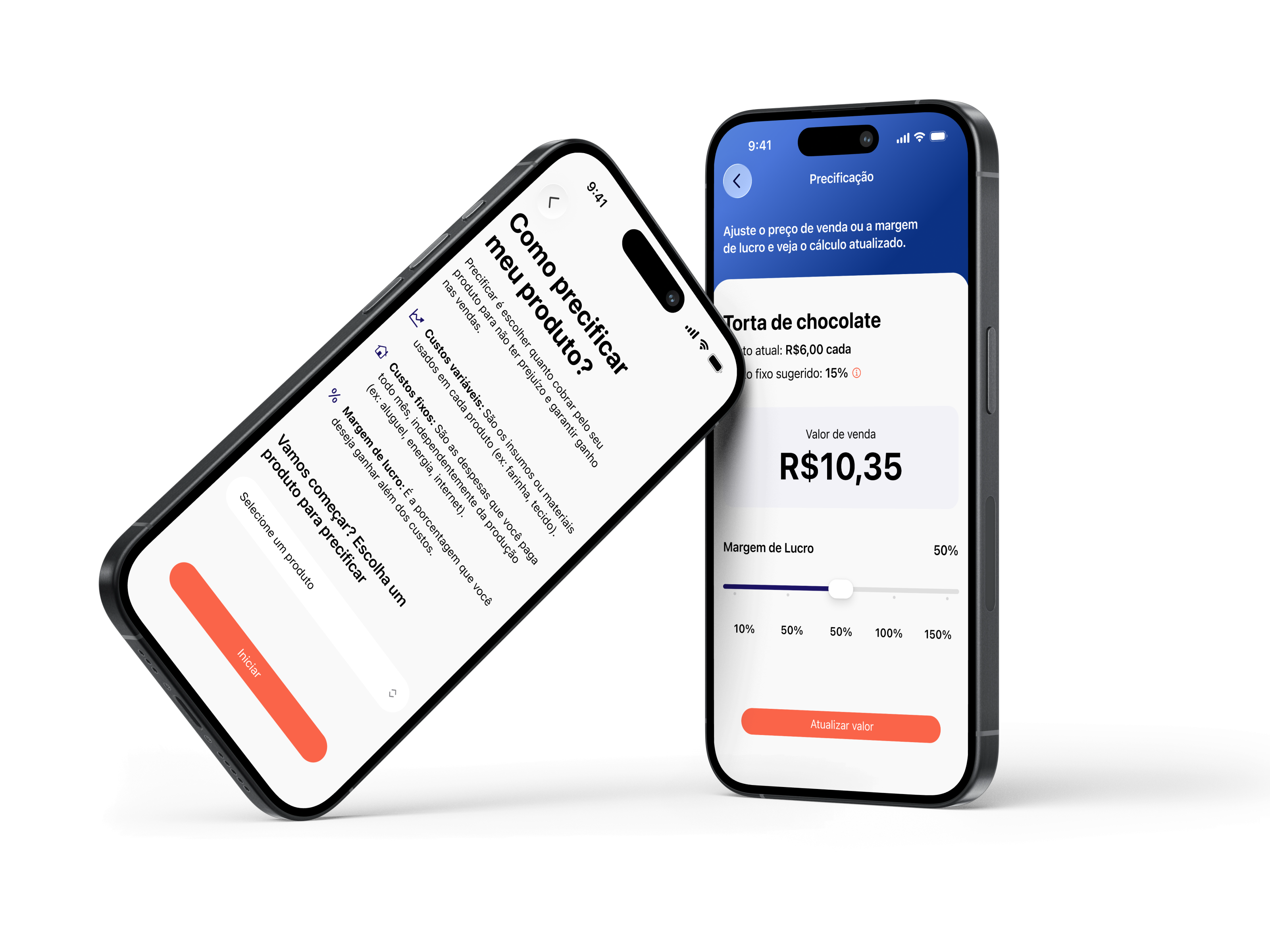
A guided pricing flow helps entrepreneurs set the final sale price for each product with confidence. By adjusting the sale value or the profit margin, users see the calculation update in real time — turning one of the hardest parts of running a small business into a simple, guided step.
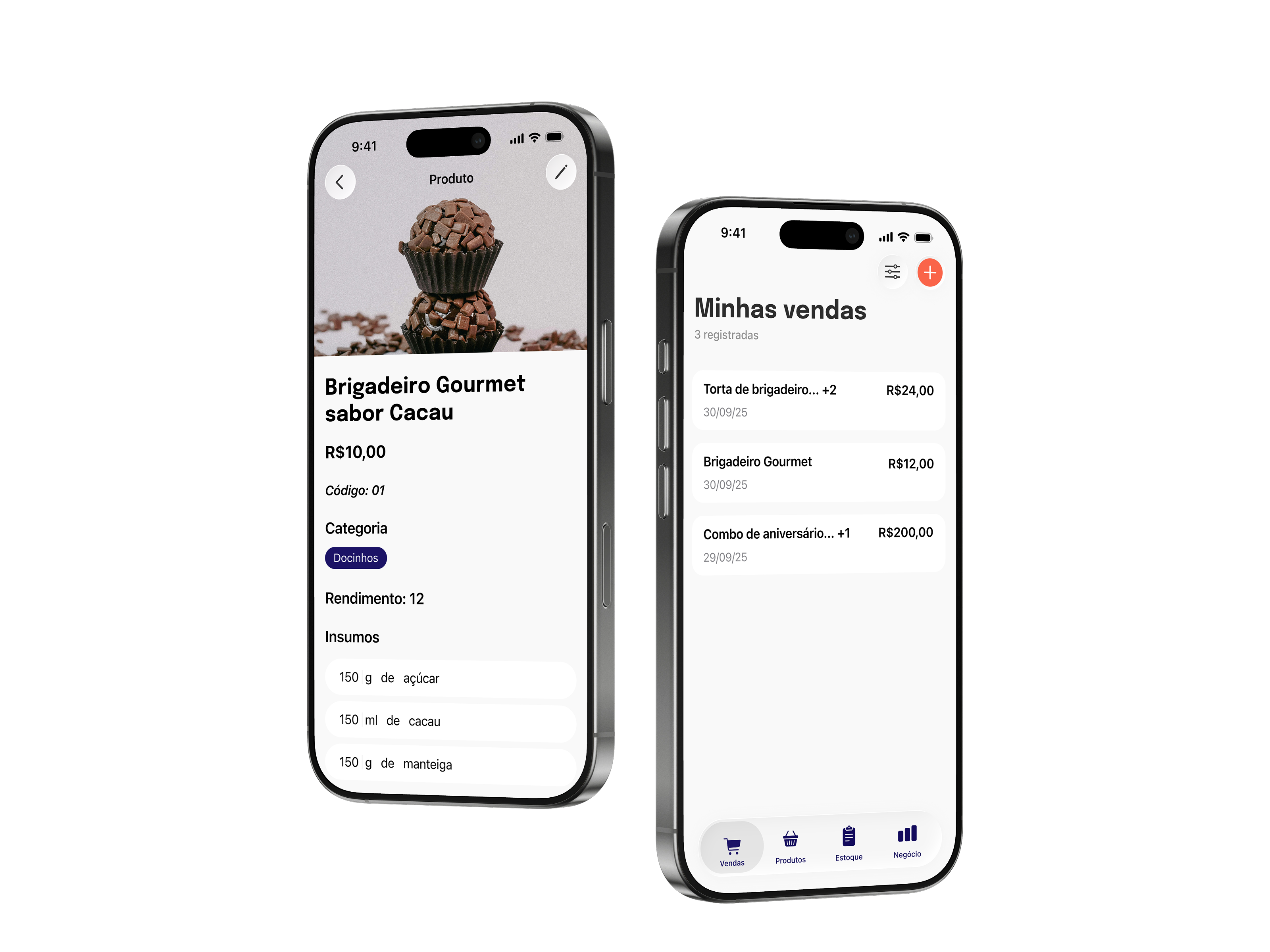
Each product is registered with its sale value, category, yield, and the ingredients needed to produce it, giving a clear view of the full offering. Sales are logged just as easily, keeping an organized history that connects directly back to inventory and financial control.