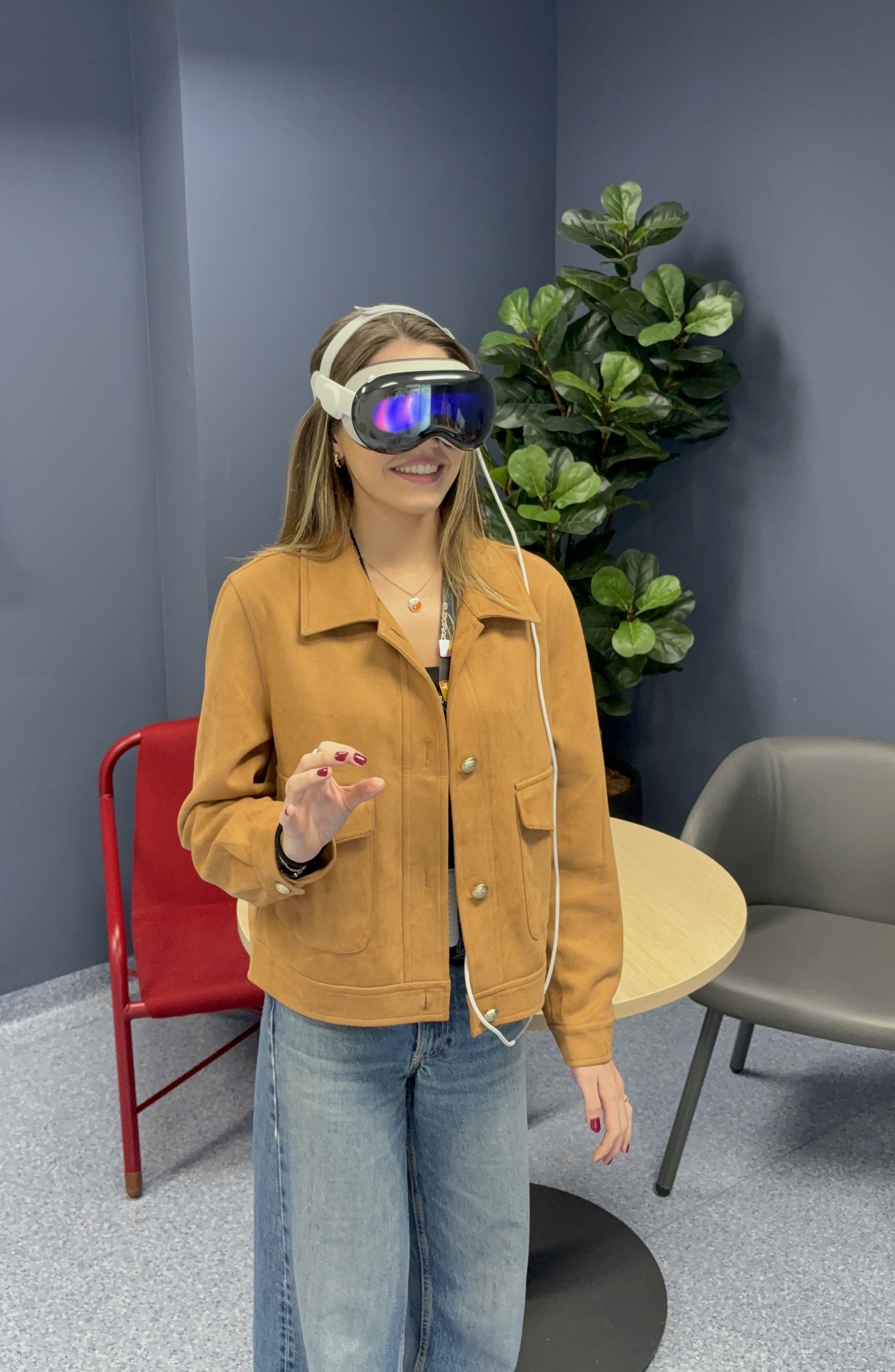
Putting on Apple Vision Pro for the first time and then opening the visionOS design guidelines was a bit disorienting — in the best possible way. I had spent years designing for screens, so I was used to thinking within fixed dimensions, clear boundaries, and familiar interaction patterns. Vision Pro immediately challenged all of that. There are no real edges to the canvas, no fixed viewport, and the user can simply turn their head and look somewhere else.
Depth is part of the hierarchy
On a traditional screen, hierarchy usually comes down to things like size, weight, contrast, and position. In spatial design, depth becomes part of that equation. How close or far something feels can change how important it seems. A control that sits slightly closer can naturally draw your attention before you even read it. I found myself thinking about hierarchy in a completely different way — and also learning when not to use depth just because I could.
Designing for eyes and hands
There’s no cursor to move around the interface. Instead, you look at something and use a small pinch gesture to interact with it. That sounds simple, but it changes a lot of the small decisions behind an interface. Targets need to be comfortable to look at and interact with. Focus states need to be clear. And important actions shouldn’t depend on the user looking somewhere uncomfortable. I spent much more time thinking about gaze feedback, interaction areas, and the physical comfort of an interaction than I normally would when designing a 2D app.
You're not just designing a screen anymore. You're designing something that exists around the user.
Prototyping without a screen
This was probably the biggest shift for me. A layout that looks balanced in Figma can feel completely different once it has actual depth and scale — especially when you're standing in your own living room looking at it. I used Figma for the early exploration and then, during testing in Vision Pro itself, where I would quickly notice when things weren’t positioned correctly when I needed to experiment with depth, scale, and spatial relationships. That made a big difference. Some decisions that looked perfectly reasonable on a screen simply didn't feel right once I experienced them in space.